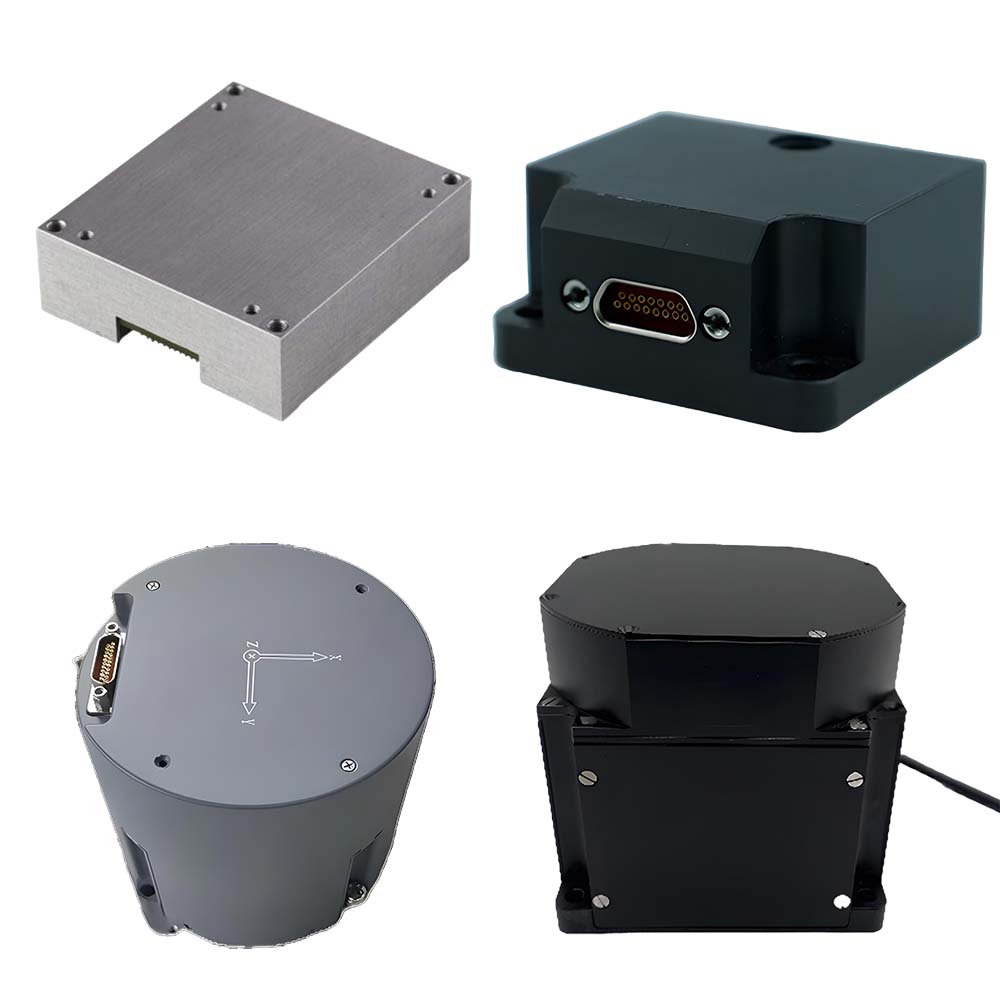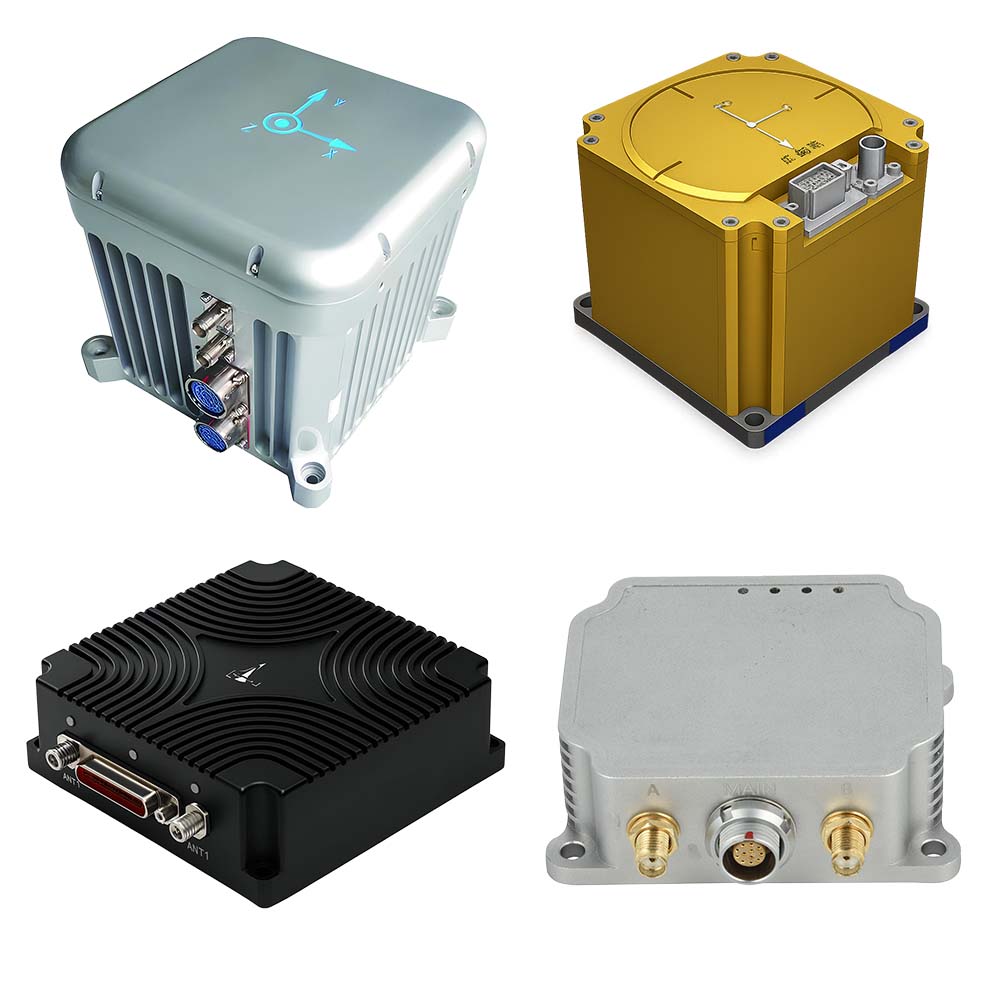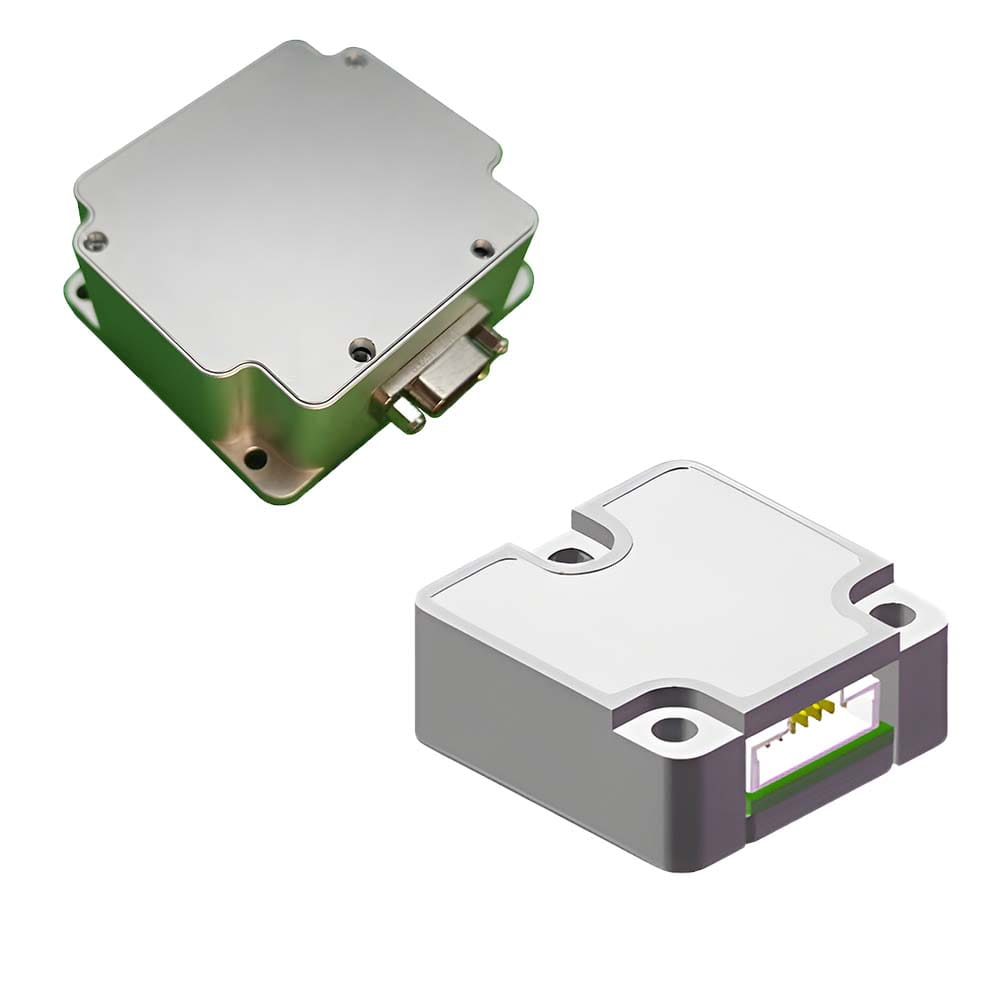
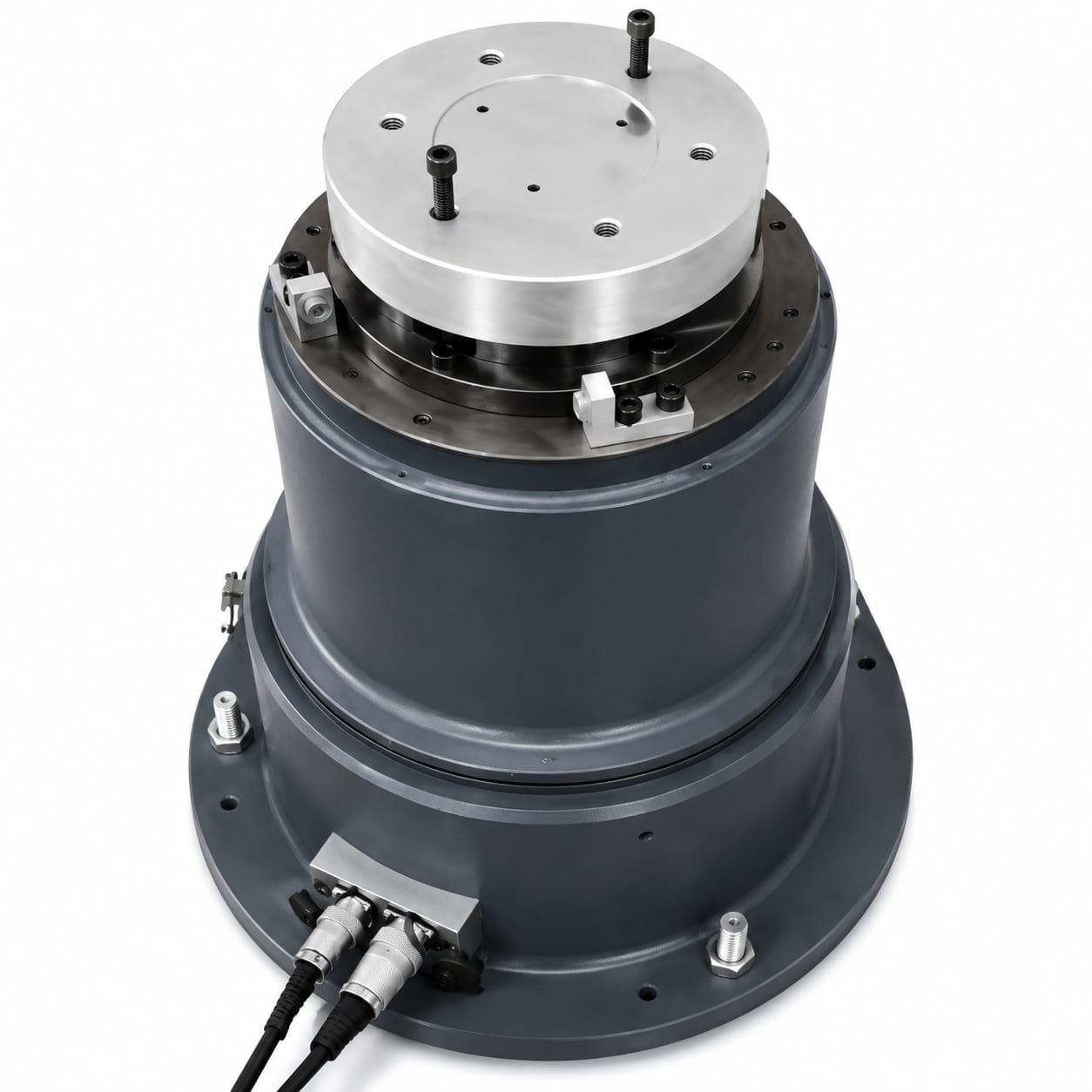
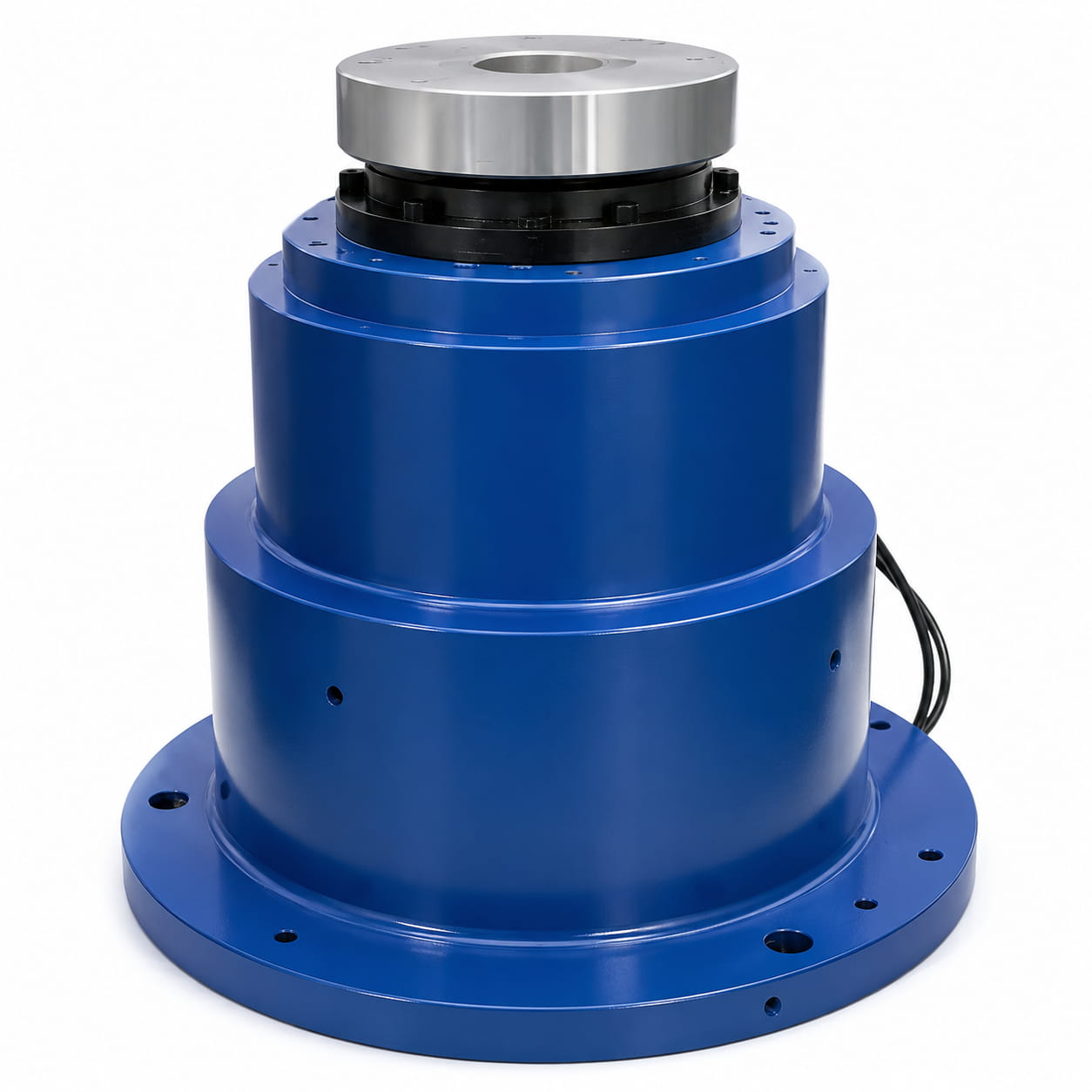
A plataforma giratória de vibração angular de eixo único consiste em duas partes principais: uma plataforma mecânica e um sistema de medição e controle. Adota uma estrutura vertical e um sistema de eixo mecânico de precisão, e possui funções de posicionamento e vibração. É utilizada para testes de vibração e calibração de sistemas inerciais.
Número da peça, :
T1G200VPedido (MOQ) :
1Séries e parâmetros do produto
| Categoria | Parâmetro | T1G200V | |
| Requisitos de carga | Tipo estrutural | Vertical | |
| Tamanho de carregamento | Disco tipo Φ200 | ||
| Peso de carga | 3kg | ||
| Planície de mesa | 0,02 mm | ||
| Salto sobre a mesa | 0,02 mm | ||
| Precisão de rotação | ± 3″ | ||
| Frequência máxima de vibração angular | 100Hz | ||
| aceleração angular máxima | 10000°/s² | ||
| Distorção da forma de onda | ≤5% | ||
| Dimensões espaciais do produto testado | Φ100 | ||
| Resolução | 0,36″ | ||
| Dimensões | A ser determinado (personalizado) | ||
| RS422 | Máximo | ≮115,2 Kbps | |
| taxa de transmissão | |||
| Conector | Temperatura | 20℃±5℃ | |
| Ambiente de trabalho | Umidade | 20% a 80% UR Ele suporta a configuração de faixa de segurança e adota medidas de proteção de segurança de dois níveis, incluindo software e hardware. Pode proteger a posição e a velocidade do prato giratório, que por sua vez está equipado com funções de proteção contra sobrevelocidade, sobrecorrente e desligamento de emergência. | |
| Requisitos de segurança | MTBF | >1000h | |
| Requisitos de Qualidade e Confiabilidade | Tempo de execução contínuo único | ≮8h | |
| Probabilidade de erro na recepção de dados | <10-6 | ||
| Vida útil | >15 anos | ||
| EMC de fontes externas | A posição de montagem central da peça de teste dentro da estrutura possui um campo magnético inferior a 1 Gauss, o que não interfere nos testes da unidade de medição inercial (IMU). | ||
| Requisitos de manutenção | A testabilidade e a manutenibilidade devem ser levadas em consideração durante o projeto do equipamento para garantir o reparo oportuno em caso de falhas. | ||
Processo de produção
Cenários de aplicação
Perguntas frequentes
P: Este sistema suporta calibração automática em temperatura total?
A: Explicação técnica: O sistema de compensação térmica baseado em software lida com faixas de temperatura de -40℃ a +85℃, com uma faixa de operação de 20℃±5℃.
Explicação comercial: Garante o desempenho consistente do sensor em ambientes extremos, como robótica em águas profundas ou aeronaves de alta altitude.
Deixe um recado
Escaneie para o WeChat :